Introduction
As industries continue to adopt automation, artificial intelligence, and digital transformation technologies, visual systems are becoming increasingly important for improving efficiency and accuracy. However, different applications often require different imaging capabilities. A solution designed for one scenario may not perform effectively in another environment with different operational requirements.
This is why businesses are increasingly looking for advanced camera solutions that are developed based on specific application needs rather than relying on standardized configurations. By combining imaging technology, software algorithms, and system integration, advanced vision systems can support complex tasks across industries such as manufacturing, healthcare, security, and smart devices.
Rather than simply capturing images, modern vision solutions are designed to collect, process, and analyze visual information to support intelligent decision-making and automated workflows.
What Are Advanced Camera Solutions?
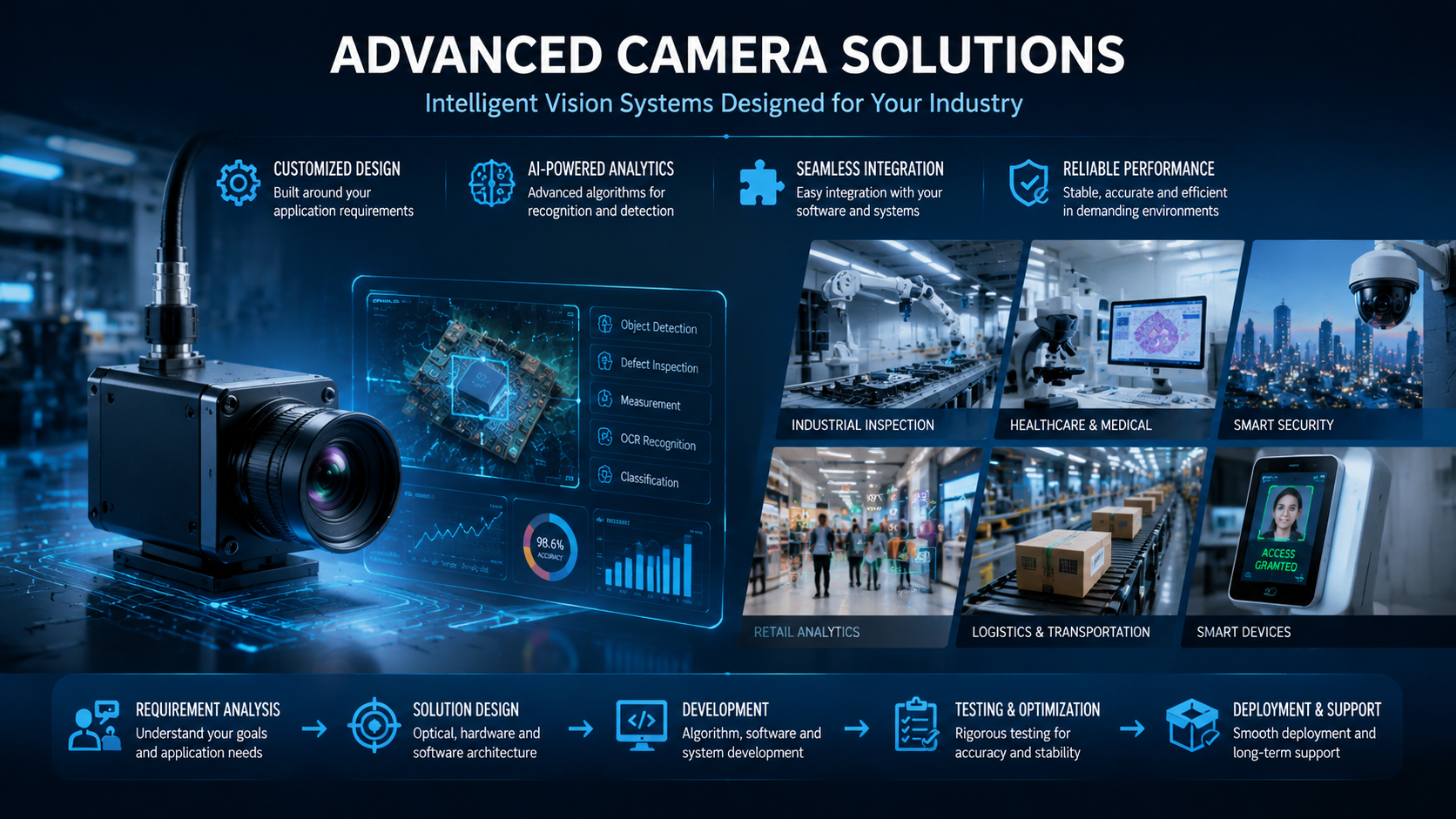
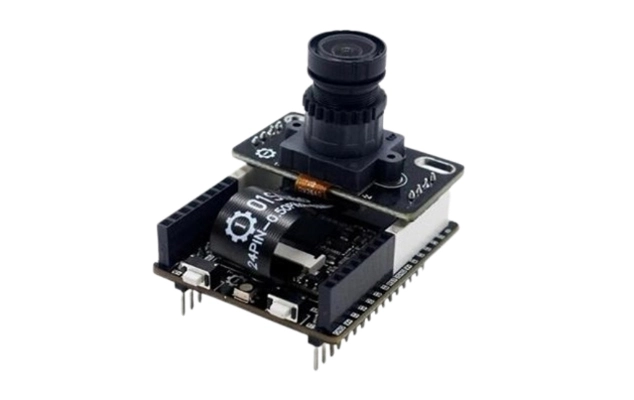
Advanced camera solutions refer to customized visual systems designed to address specific business challenges through integrated imaging technologies. Unlike conventional imaging setups, these solutions focus on the complete application process, including image acquisition, data processing, analysis, and system communication.
A complete advanced vision system may involve:
Customized optical design
Image processing technology
AI-based recognition algorithms
Software integration
Data communication systems
Application-specific optimization
The development process begins with understanding the customer's requirements, including the working environment, target objects, expected performance, and integration objectives. For businesses requiring specialized visual capabilities, StarCoreVision develops advanced camera solutions that help organizations create efficient and reliable imaging systems for different applications.
Why Businesses Need Advanced Vision Systems
Traditional imaging technologies may be suitable for basic applications, but many modern industries require more flexible and intelligent solutions.
Complex Operating Environments
Industrial and commercial environments often include challenges such as:
Changing lighting conditions
High-speed operations
Different object sizes and materials
Strict accuracy requirements
A customized vision system can be optimized to handle these specific conditions.
Intelligent Data Processing
Modern businesses need more than image capture. They require systems that can analyze visual information and provide meaningful results. Advanced image processing technologies enable applications such as:
Object recognition
Automated inspection
Pattern analysis
Defect detection
Data extraction
Seamless System Integration
A vision system needs to work together with existing business processes. Integration with software platforms, automation equipment, and data systems allows organizations to build more efficient workflows.
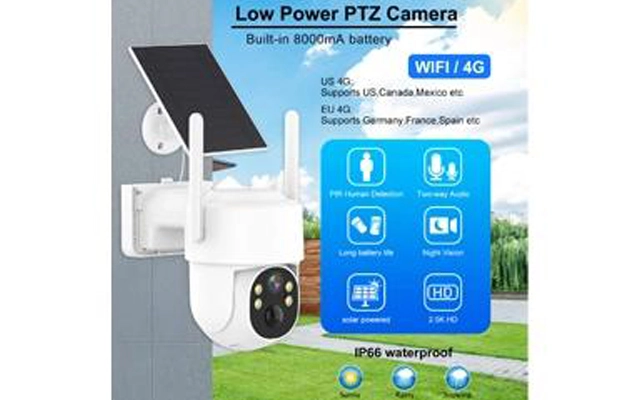
For example, an IP camera solution in a commercial or industrial environment may require additional customization, including intelligent analysis capabilities, data management functions, and integration with existing systems.
Key Technologies Behind Advanced Camera Solutions
Optical and Imaging Design
Image quality is influenced by many factors, including lens selection, viewing angle, lighting conditions, and application requirements.
A properly designed imaging system ensures that visual information can be captured accurately and consistently, providing a reliable foundation for further analysis.
AI-Powered Image Analysis
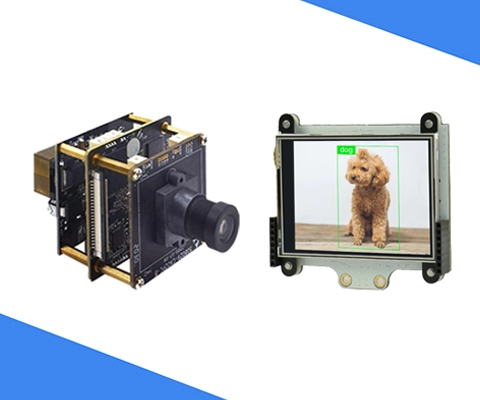
Artificial intelligence has significantly expanded the capabilities of modern vision systems. AI algorithms allow systems to identify patterns, analyze images, and support automated decision-making.
Common AI imaging functions include:
Object detection
Classification
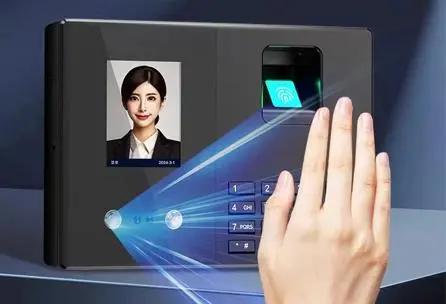
Recognition
Measurement
Visual inspection
These capabilities are especially valuable in industries where accuracy and efficiency are critical.
Embedded Processing and Software Development
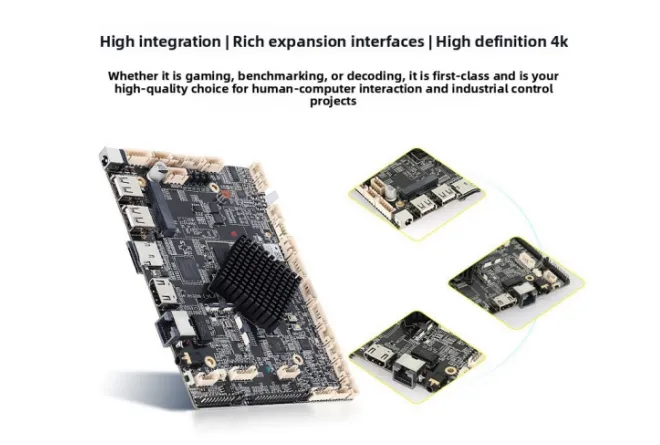
Advanced vision applications often require customized software solutions to process and manage image data. Through software development and system integration, businesses can create workflows that match their operational requirements.
This enables visual systems to become an active part of automation processes rather than an isolated imaging component.
Applications of Advanced Vision Systems Across Industries
Manufacturing and Industrial Inspection
Manufacturing is one of the most common fields requiring advanced visual technologies. Companies use customized imaging systems to improve quality control, reduce manual inspection, and increase production efficiency.
Potential applications include:
Product defect detection
Assembly verification
Component inspection
Process monitoring
By analyzing visual information in real time, businesses can identify issues earlier and improve overall production reliability.
Healthcare and Medical Technology
Healthcare applications often require highly accurate imaging and reliable data processing. Customized vision systems can support professional workflows by providing optimized image acquisition and analysis capabilities.
The system design can be adapted according to specific requirements, ensuring better compatibility with existing processes.
Security and Smart Monitoring
Modern security applications are moving beyond traditional video recording. Intelligent vision systems can support automated monitoring, event analysis, and data-driven management.
Instead of simply collecting video information, advanced solutions can help organizations better understand visual data and respond more efficiently.
Smart Devices and Commercial Applications
Many smart devices require integrated imaging capabilities that match specific product designs and user experiences.
Customized vision solutions can support applications such as:
By designing the imaging system around the final application, businesses can achieve better performance and usability.
How Advanced Camera Solutions Are Developed
Developing an effective vision system requires a comprehensive approach.
Step 1: Requirement Analysis
The development process starts with understanding:
Application objectives
Environmental conditions
Technical requirements
Expected results
This ensures that the final solution matches real-world needs.
Step 2: System Architecture Design
Based on the project requirements, engineers define the system structure, including:
Imaging configuration
Processing methods
Software functions
Integration requirements
Step 3: Testing and Optimization
Before deployment, the system is tested under practical conditions. Performance optimization helps ensure stable operation and long-term reliability.
FAQ
What industries can benefit from advanced camera solutions?
Advanced camera solutions are widely used in manufacturing, healthcare, security, retail, logistics, and smart device applications where customized visual capabilities are required.
Are advanced camera solutions the same as standard cameras?
No. Advanced camera solutions focus on complete vision system development, including imaging design, software integration, and intelligent processing based on specific application requirements.
Why do businesses choose customized vision systems?
Businesses choose customized vision systems because they provide greater flexibility, better performance, and improved compatibility with specific workflows compared with standardized solutions.
Conclusion
As visual intelligence becomes increasingly important across industries, businesses need imaging systems that can adapt to their unique operational challenges. Advanced camera solutions provide a flexible approach by combining imaging technologies, AI capabilities, and software integration to create purpose-built vision systems.
StarCoreVision focuses on developing customized visual solutions that support different industries with reliable system design and application-driven engineering. Through advanced camera solutions, businesses can improve automation, optimize workflows, and unlock new possibilities in intelligent imaging applications.