After more than a decade in the imaging business, the phrase we hear most often is: "I didn't expect it to be this complicated."
Clients come to us with ideal specs, thinking it's just a matter of picking a lens, matching it with a sensor, and writing a few lines of code. Then reality hits: the lens and sensor don't match, the sensor interface isn't compatible with the processor, the processor runs too hot to fit in the housing, and once the housing is finally built, the image is full of noise...
Custom imaging systems are never just "assembling parts." It's systems engineering. Our value? Pulling you out before you fall into these holes.
Why Customize? Because Standard Products Always Compromise
Don't get us wrong—we sell standard products too. But standard products are designed for the "majority," and your needs are often not in that majority.
Here's a simple example: You need to capture high-speed motion. Off-the-shelf imaging systems with rolling shutters distort moving objects. Global shutters solve that, but you're limited to a few models. Find one that works? The interface doesn't match, so you add an adapter board. Now signal degrades, and noise creeps in.
After all this, you realize: Using a standard product means accepting a chain of compromises.
Customization isn't a luxury—it's the only option when you refuse to compromise.
The custom projects we've delivered often started with "refusing to compromise":
Sensor speed not enough? We redesign the pixel architecture to push frame rates higher
Dynamic range too narrow? Adjust the readout circuitry to dig out shadow detail
Interface bandwidth limited? Change protocols, rewrite logic—make data flow faster
Harsh environment? Reinforce housings, optimize thermal management, add protection
Standard products tell you "this is all you get." Custom solutions show you "here's what else is possible."
Four Stages: Turning Your Idea into a Product
01 Listen First, Then Act
We've seen too many projects fail halfway because the direction was wrong from the start. Root cause? Not talking things through.
That's why we insist: Before any custom imaging solution, including industrial machine vision systems, takes shape, we talk until we truly understand.
Not by making you fill out forms—by sitting down and talking. What exactly are you trying to "see"? What does it look like? How fast does it move? Under what lighting? What's the image for—human review or machine analysis? How hot? How dirty? Any vibration? Production volume? Cost targets?
Outsiders think these details are tedious. Insiders know: Change any answer, and the entire solution redesigns.
Once we've talked it through, you get a requirements spec, a preliminary architecture proposal, and recommendations for key components. Take it and move forward, or shop it around—we're confident in what we deliver.
02 Design and Development: Where Expertise Matters
Project locked. Now the real work begins. No shortcuts here—only experience counts.
Matching optics and sensors?
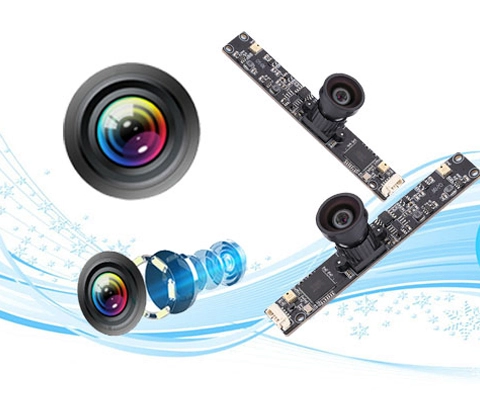
It's not about picking the highest resolution. Sensor size, pixel pitch, lens resolving power, interface matching... miss by a hair, and image quality suffers. With thousands of projects behind us, we know what combinations deliver what results.
Hardware design?
Schematic capture, PCB layout, signal integrity, power integrity, EMC compliance... We're not just drawing boards—we're drawing "boards that won't fail." Fifteen years in, we know where interference hits, where heat builds, where solder joints crack.
FPGA logic?
High-speed image processing? CPUs choke, GPUs draw too much power. FPGA is the answer. But sloppy logic turns parallel paths into serial bottlenecks. Every line of our FPGA code chases the same goal: keep data moving at full bandwidth.
ISP tuning?
The same sensor can deliver wildly different colors depending on who tunes it. We don't chase "vivid"—we chase "accurate." Medical imaging demands accuracy. Industrial inspection demands accuracy. Scientific imaging demands it more. This takes experience—and patience.
What you get:
Engineering prototypes, complete drawings, firmware source code, SDKs, test reports. You can optimize further yourself, or hand it to us for the next stage.
03 Pilot Production: From "It Works" to "It Scales"
Prototypes running? Don't celebrate yet. Lab performance doesn't guarantee production performance.
This stage exists to find problems on purpose:
All features working? Test.
High/low temperature tolerance? Test.
Running continuously for a month—still stable? Test.
Swap component batches—consistent? Test.
Assembly workers making errors? Refine the process.
We've watched too many custom imaging solutions die at the "prototype to production" stage. Designs that ignored assembly tolerances. Designs blind to component batch variation. Designs without test efficiency built in. We clear these hurdles before they trip you.
04 Mass Production: Not "Can We Build It," but "Can We Keep Building It"
Production isn't just scaling up prototypes. Component sourcing, incoming inspection, process control, final testing, logistics, after-sales support... one weak link undoes everything.
As an experienced imaging solutions company, we maintain our own production systems and partner with trusted contract manufacturers. Regardless of volume, we insist on: 100% functional testing, 100% image quality testing. Every unit leaving is good.
And we understand: Your product isn't selling for just one year. So we guarantee: End-of-life notices, buffer stock plans, alternatives—we monitor it all for you.
Three Partnership Models—Choose What Fits
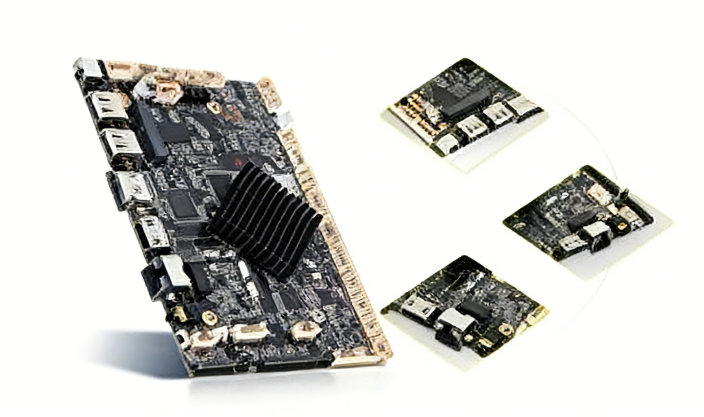
Model One: Core Board Solution
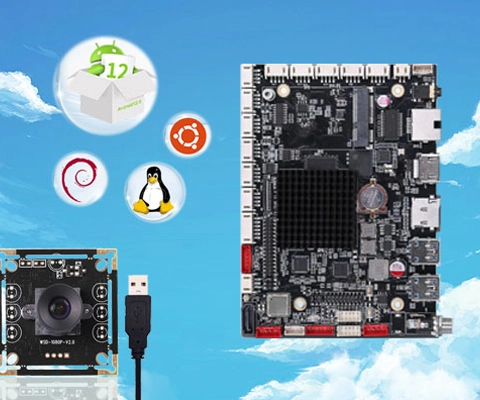
You have your own housing, your own peripheral circuits—you just need the "heart." We deliver core boards; you integrate. Fast development, lower cost, you retain control.
Model Two: Full Camera Customization
You need a complete camera—ready to use out of the box. From sensor selection to enclosure design, we deliver a finished product. You just use it.
Model Three: Sensor Customization
This is the deepest level. Pixel architecture, readout speed, dynamic range... designed from the chip up to your specs. For极致 performance scenarios: scientific imaging, defense, high-end medical.
What Innovations Have We Made in Our Experience Working with Custom Imaging Solutions?
High-Speed Vision System: FPGA-SoC based, 1000 fps for industrial sorting. Objects flying past—one thousand captures per second. Not a single frame can blur.
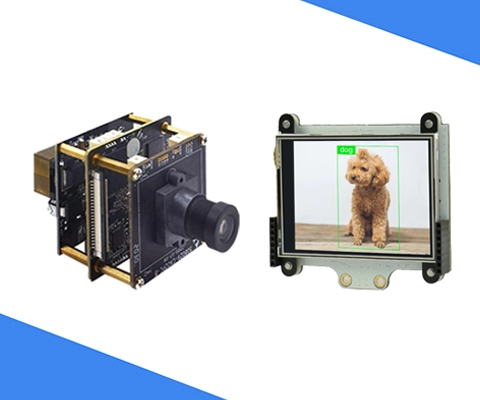
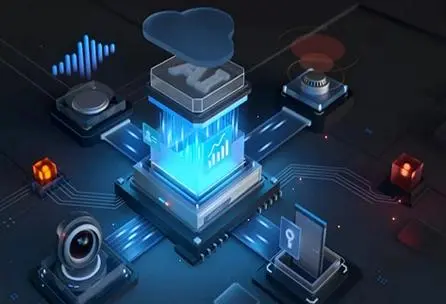
Smart Camera Platform: Multi-core processor with AI acceleration, running at the edge. No cloud uploads, no latency—results on the spot.
Scientific-Grade Imaging: Custom sensors with read noise below 2e-, dynamic range above 85dB. On telescopes, looking at stars.
How to Start to Custom Your Imaging Solutions?
All this isn't meant to overwhelm you. Quite the opposite—it shows you there's a path, one others have walked. You don't have to figure it out alone.
Just tell us:
What do you need to see?
In what environment?
What's the image for?
What's your volume?
We'll handle the rest.
Tell us what you want to achieve. We have the solution.