What are the Benefits of MIPI Camera Module for Windows Hello Solutions
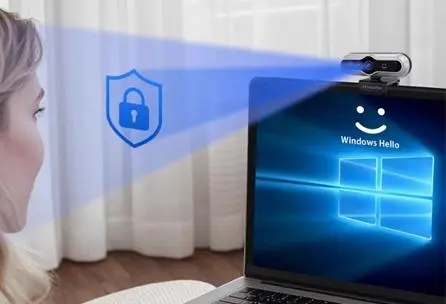
A customized MIPI camera module provides flexible, high-performance imaging capabilities that are crucial for secure and seamless biometric authentication. StarCoreVision delivers full integration solutions for OEM and ODM manufacturers, ensuring optimal performance without the need to develop camera hardware in-house.
| Benefit | Description |
| High-Precision Facial Recognition | The MIPI interface supports high-resolution sensors, enabling accurate and reliable authentication for Windows Hello systems. |
|
| Low Latency and Fast Data Transfer | MIPI interface ensures quick image transmission, which is essential for real-time facial detection and secure login. |
|
| Compact and Flexible Design | Customizable form factor allows seamless integration into laptops, kiosks, and smart terminals without design constraints. |
|
| Enhanced Security | Supports advanced biometric authentication algorithms for secure user verification. |
|
| Efficient Development | Reduces development cycles by providing ready-to-integrate camera modules and firmware optimization. |
|
| Scalable Customization | StarCoreVision can tailor lens, sensor, and interface options to meet specific device requirements. |
|
By leveraging a MIPI camera module solution, manufacturers can offer devices with high-quality biometric capabilities while focusing on software and product innovation, rather than hardware development.
Typical Areas of Application for MIPI Camera Module Solutions
Customized MIPI camera module solutions are versatile and can be deployed in various scenarios where secure and reliable facial authentication is required.
1.Business Laptops and Notebooks
Enhances user login experience with fast and accurate Windows Hello authentication, while maintaining a slim device profile.
2.Smart Kiosks and Terminals
Enables secure customer identification in banking, retail, airports, and public service points.
3.Enterprise Security Systems
Integrated into access control systems for office buildings, research labs, and sensitive workspaces, providing efficient and secure authentication.
4.Healthcare and Education Devices
Supports secure access to patient records, lab equipment, and school devices, enhancing safety and accountability.
5.Industrial and Edge Computing Equipment
Provides authentication solutions for industrial PCs and specialized terminals where secure operator identification is critical.
.png "MIPI_Camera_Module_Solutions_(1).png")
StarCoreVision's MIPI camera module solutions allow manufacturers to implement advanced facial recognition capabilities across a wide range of devices, improving both security and user experience without the complexity of developing custom camera hardware from scratch.
MIPI camera module vs USB Solutions: Differentiated Advantages for Windows Hello Deployment
As a professional vision system developer serving laptop and smart terminal OEMs, we fully understand your hesitation between MIPI and USB camera architectures for Windows Hello biometric authentication. Our custom MIPI camera module holds clear upper hand for premium biometric devices:
Lower transmission latency for instant facial recognition
MIPI D-PHY delivers high-speed, low-latency raw image data transmission, far outperforming USB’s protocol overhead. For Windows Hello, this translates to millisecond-level face detection and matching, eliminating lag during login—critical for high-end business notebooks requiring fluid user experience. USB modules often suffer frame delays that weaken real-time authentication stability.
Space-saving compact layout for slim device design
MIPI modules connect directly to mainboard SOCs via tiny differential signal cables, without bulky USB controller circuitry. We tailor ultra-thin form factors that fit seamlessly into narrow-bezel laptop screen frames, compact kiosks and edge terminals. USB camera hardware needs extra power and signal boards, restricting slim-profile product iteration.
Stable high-resolution IR imaging for reliable Windows Hello security
Windows Hello relies on IR depth sensing to prevent photo spoofing. Our MIPI interface supports full-bandwidth IR sensor output without compression loss, preserving depth data accuracy. USB compression can degrade infrared detail, raising spoofing risks and failing Microsoft’s Windows Hello certification standards easily.
Reduced power consumption for longer device battery life
MIPI native low-power operation draws far less current than USB bus-powered camera systems. For portable laptops and battery-operated smart terminals, this optimizes overall power budgets without compromising 24/7 standby biometric readiness.
For manufacturers prioritizing certified, thin, high-performance Windows Hello hardware, MIPI camera module is the long-term scalable solution we engineer and optimize end-to-end.
Mass Production Adaptation & Quality Control Standards of Our MIPI Camera Module for Laptop Industry Compliance
As a mature vision solution provider cooperating with volume OEM notebook brands, our entire MIPI camera module production chain is built to meet strict PC industry quality, certification and delivery norms:
Pre-production validation aligned with Windows Hello & laptop industry specs
Before mass rollout, our engineering team completes full compatibility testing with Intel/AMD notebook platforms, Microsoft Windows Hello certification checklists, and laptop electromagnetic interference (EMI/EMC) standards. Every prototype undergoes temperature cycling, vibration and drop tests matching notebook reliability requirements to eliminate field failure risks in advance.
Tiered strict in-line QC for consistent batch yield
We implement 6-stage inspection during module assembly: sensor calibration, lens distortion correction, MIPI signal continuity testing, IR imaging uniformity, firmware burning verification and final Windows Hello function simulation. Our stable production yield keeps defective rates far below the acceptable threshold for large laptop OEM orders, avoiding costly production line downtime for your assembly plants.
Scalable monthly output & stable component supply chain
We maintain long-term partnerships with top-tier sensor, lens and chip suppliers to lock component stock for bulk orders. Our factory flexibly scales monthly capacity to support both mid-volume small-batch runs and million-unit annual laptop OEM programs, with fixed lead-time commitments to match your product launch timelines.
Full compliance documentation for global market rollout
We supply complete certification files including FCC, CE, RoHS and Windows Hello compliance reports alongside each shipment. Our quality traceability system records every batch’s component serial numbers and test logs, supporting quick after-sales troubleshooting and global regulatory customs clearance for your notebook products sold worldwide.
Development Cooperation Process & Full Technical Support System for Custom MIPI Camera Modules
Our standardized customized development workflow and dedicated technical support team streamline collaboration for your R&D and procurement teams from concept to mass production:
Step 1: Requirement Confirmation & Feasibility Evaluation
Your engineers share device dimensions, Windows Hello performance targets, sensor/lens specs and platform model; our FAE vision engineers provide a free technical feasibility review within 2 working days, issuing a detailed customized module proposal with cost and timeline breakdowns.
Step 2: Prototype Design, Fabrication & Sample Delivery
We design PCB layouts, tune optical structures and flash tailored firmware to match your mainboard MIPI pin definitions. Functional samples arrive at your facility for Windows Hello integration testing within 2–4 weeks based on customization complexity.
Step 3: Joint Debugging & Performance Optimization
Our on-demand FAE team conducts remote or on-site joint debugging to resolve MIPI communication, IR imaging and biometric algorithm matching issues. We iteratively adjust firmware to boost recognition accuracy, reduce latency and pass Windows Hello certification.
Step 4: Pilot Run Validation & Mass Production Handover
After prototype approval, we arrange small pilot batches to verify assembly compatibility with your production lines. Once pilot performance is signed off, we transfer to formal mass production per your order schedule.
Long-term post-mass-production support system
Dedicated FAE account manager assigned exclusively to your project for all technical inquiries;
Free firmware upgrade iterations to adapt Windows system updates and new biometric security patches;
Rapid after-sales fault analysis: we provide root-cause reports and corrective solutions within 24 hours for any batch quality issues;
Continuous component lifecycle notification—we proactively alert you to sensor/lens end-of-life schedules and offer drop-in replacement MIPI module designs to avoid product discontinuation risks.
From initial design sketch to years of post-launch maintenance, we act as your extended vision hardware R&D department, removing the burden of in-house camera module development entirely.